















Welcome to Aluminess's Adventure Profile!
Rob Daugherty Is The Overland Gear Guy
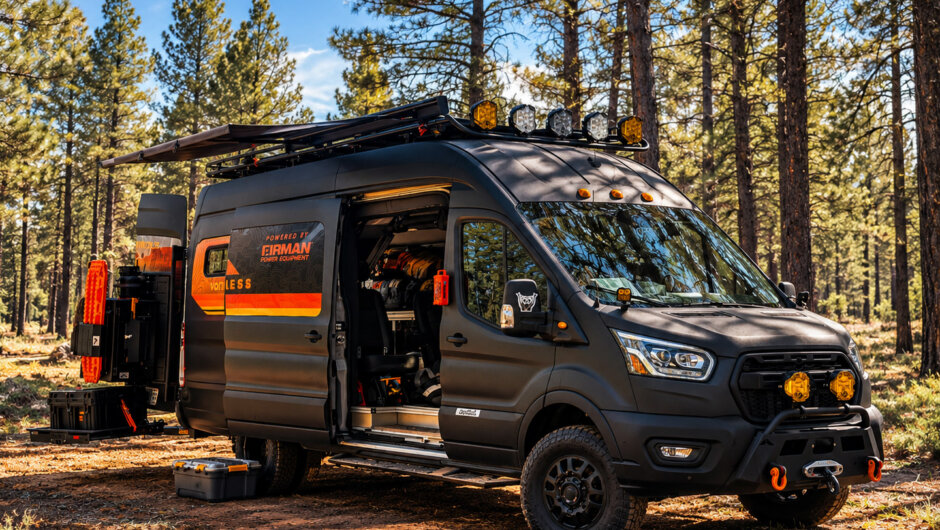
Over the years, Sammy Seles from Big Hearts Tiny Spaces, her husband, and their three children have traveled in everything from conventional RVs and fifth-wheels to tents and a formidable Ford F-350 with a Palomino HS2901 truck camper. Each setup worked for a particular chapter, and each taught the family something about what they actually needed.
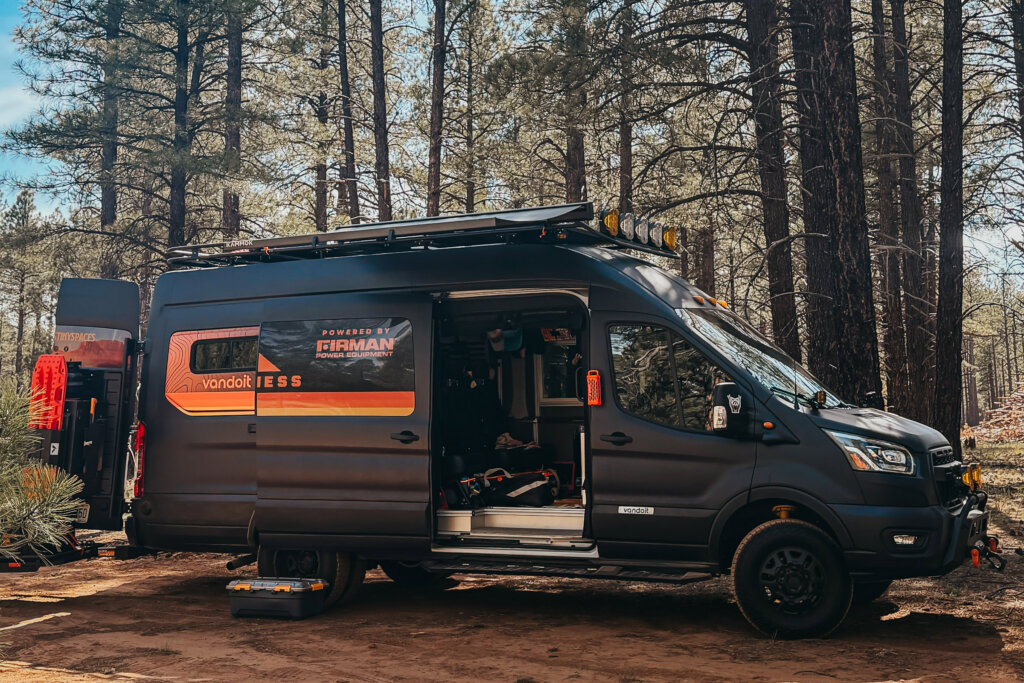
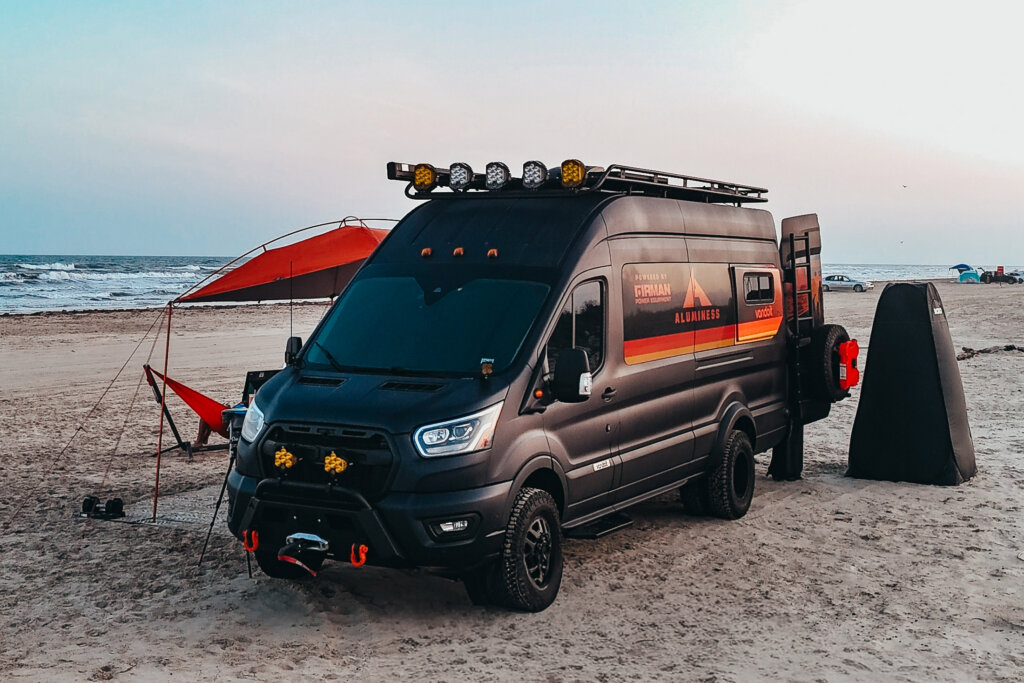
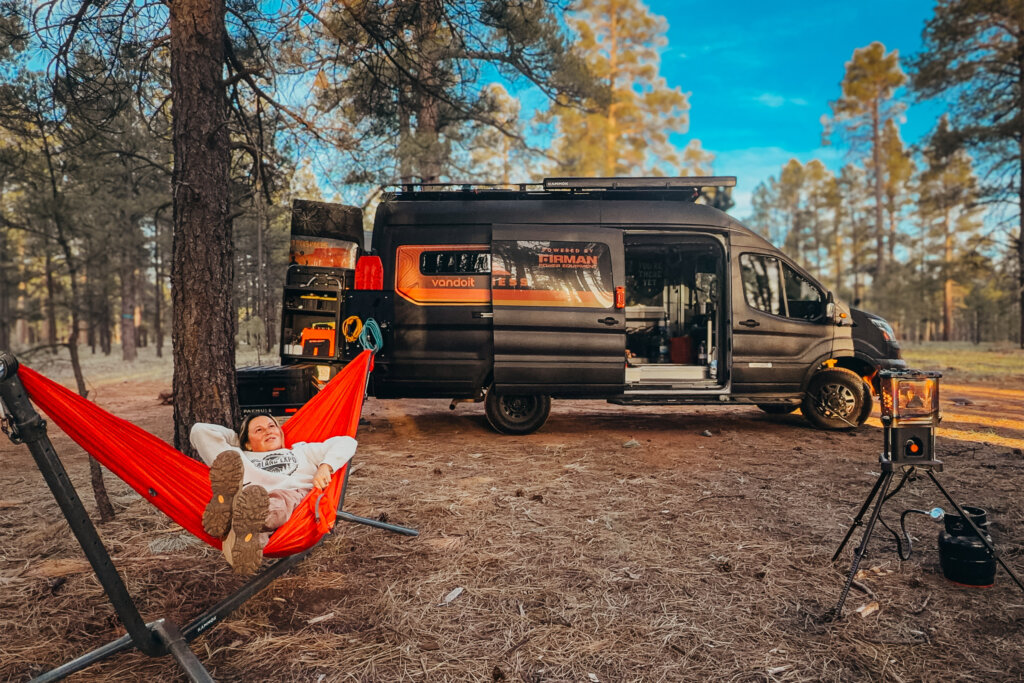
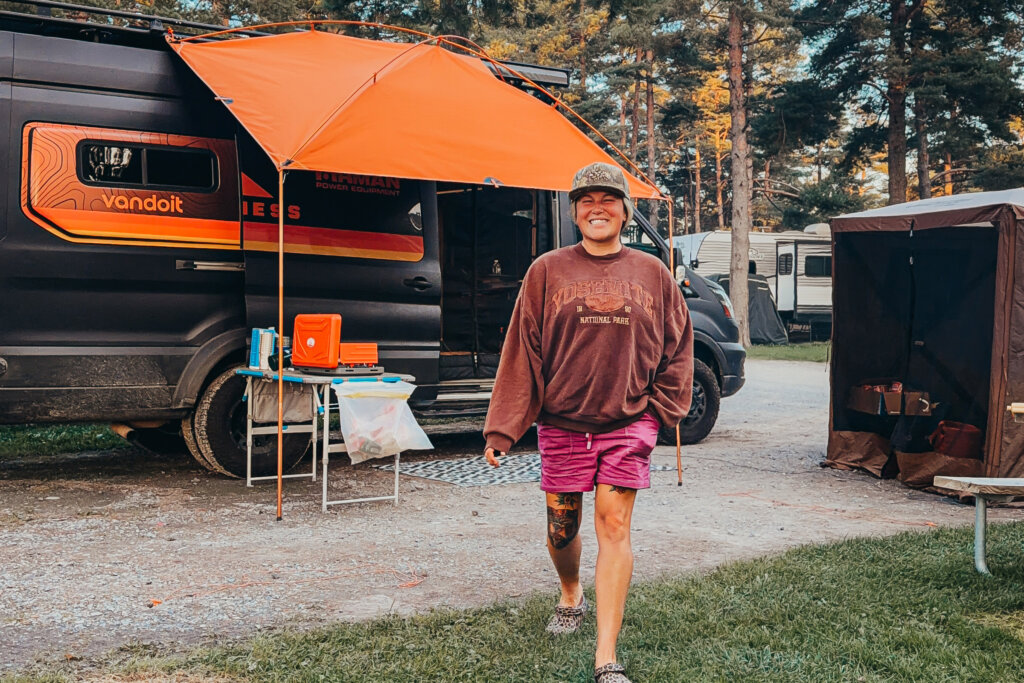
Eventually, those lessons pointed Sammy toward something different: a modular VanDOit Ford Transit equipped to function as an everyday family vehicle, sleeping space, gear hauler and capable basecamp when the pavement ends.
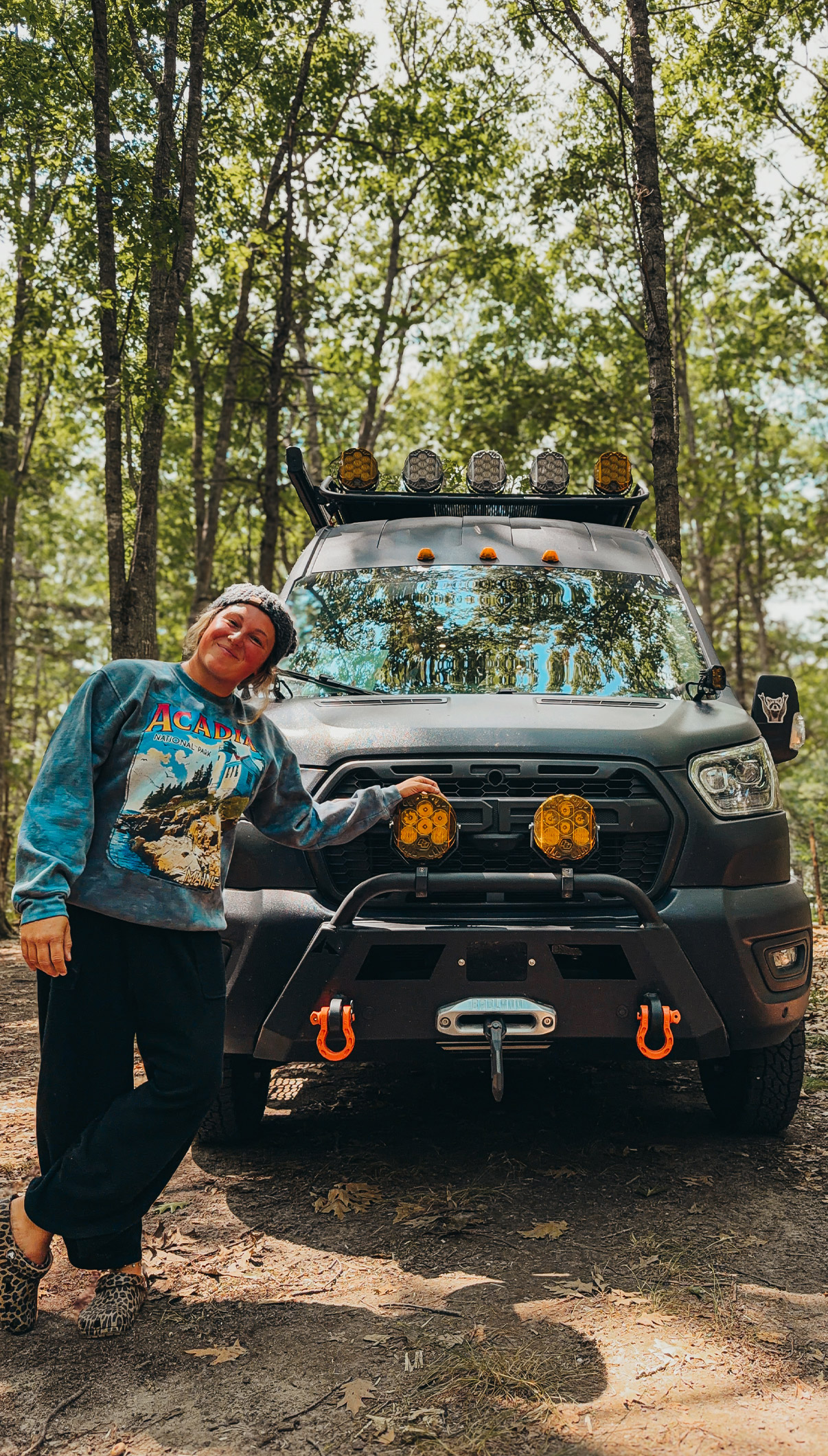
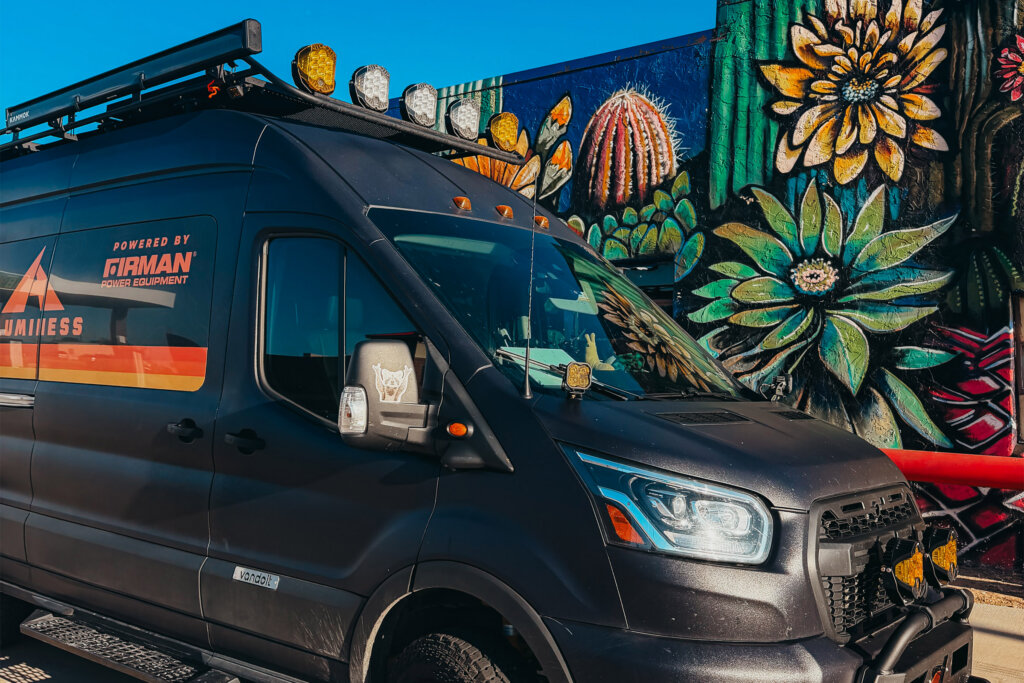
Today, the Transit carries a full Aluminess exterior setup, a rugged bed-liner-style exterior finish and, more importantly, a family that has made learning, exploring and getting outside part of everyday life.
We caught up with Sammy to talk about the evolution of Big Hearts Tiny Spaces, raising kids on the road and why going smaller has ultimately opened up a much bigger world.
From Big RVs to a More Capable Adventure Van
Aluminess: You’ve traveled in everything from travel trailers and fifth-wheels to the Palomino truck camper and now the VanDOit Transit. What did those different rigs teach you?
Our travel trailers and fifth-wheel were our homes on wheels for most of the last seven years of being nomadic. They taught us pretty quickly that we really don’t need a ton of space to have everything we need.
At the same time, we started realizing that our “home on wheels” was actually too big to take us to some of the places we wanted to explore.
I wanted to get farther off-road and into more remote places, so I started tent camping with the kids. That opened up an entirely different kind of travel for us, but it also taught me pretty quickly that when I was traveling solo with three kids, I wanted something that offered a little more shelter and security.
That’s where the Palomino truck camper came in.
It gave us a small footprint, a comfortable place to sleep on quick stops and enough of a home base to comfortably camp for longer stretches. We got really good at scouting off-road campsites and found some absolutely epic places with it.
But then the kids did what kids do—they kept growing.
Eventually, five people in the truck camper started getting pretty tight. The next step would have been a bigger truck and bigger camper, which also meant a much larger footprint.
Every setup taught us something different. The big RVs taught us that we don’t need a huge house to feel at home. Tent camping taught us how much farther we wanted to explore. The truck camper taught us how valuable a small footprint and true mobility are.
Ultimately, all of those lessons led us to the VanDOit Transit.
We weren’t looking for another RV. We wanted something that could be our everyday vehicle, comfortably carry our family of five, give us a place to sleep and still take us farther down the road when the pavement ends.
The best rig isn’t necessarily the biggest one or the one with the most amenities. It’s the one that gives your family access to the life you actually want to live.
Why the Ford Transit?
Aluminess: What did the van give you that your previous setups couldn’t?
We can park almost anywhere!
That sounds like such a simple thing, but after traveling with much larger rigs, it completely changes how we experience a destination.
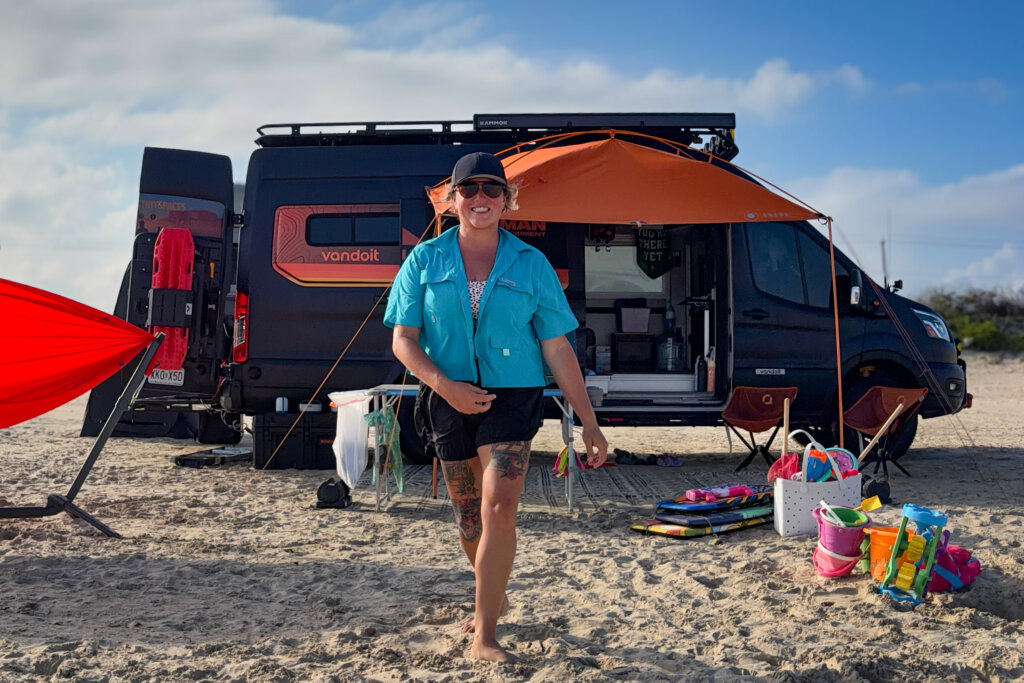
We can spend the day in a busy city, park at a beach, pull into a trailhead, grab groceries and then drive out into the middle of nowhere with everything we need.
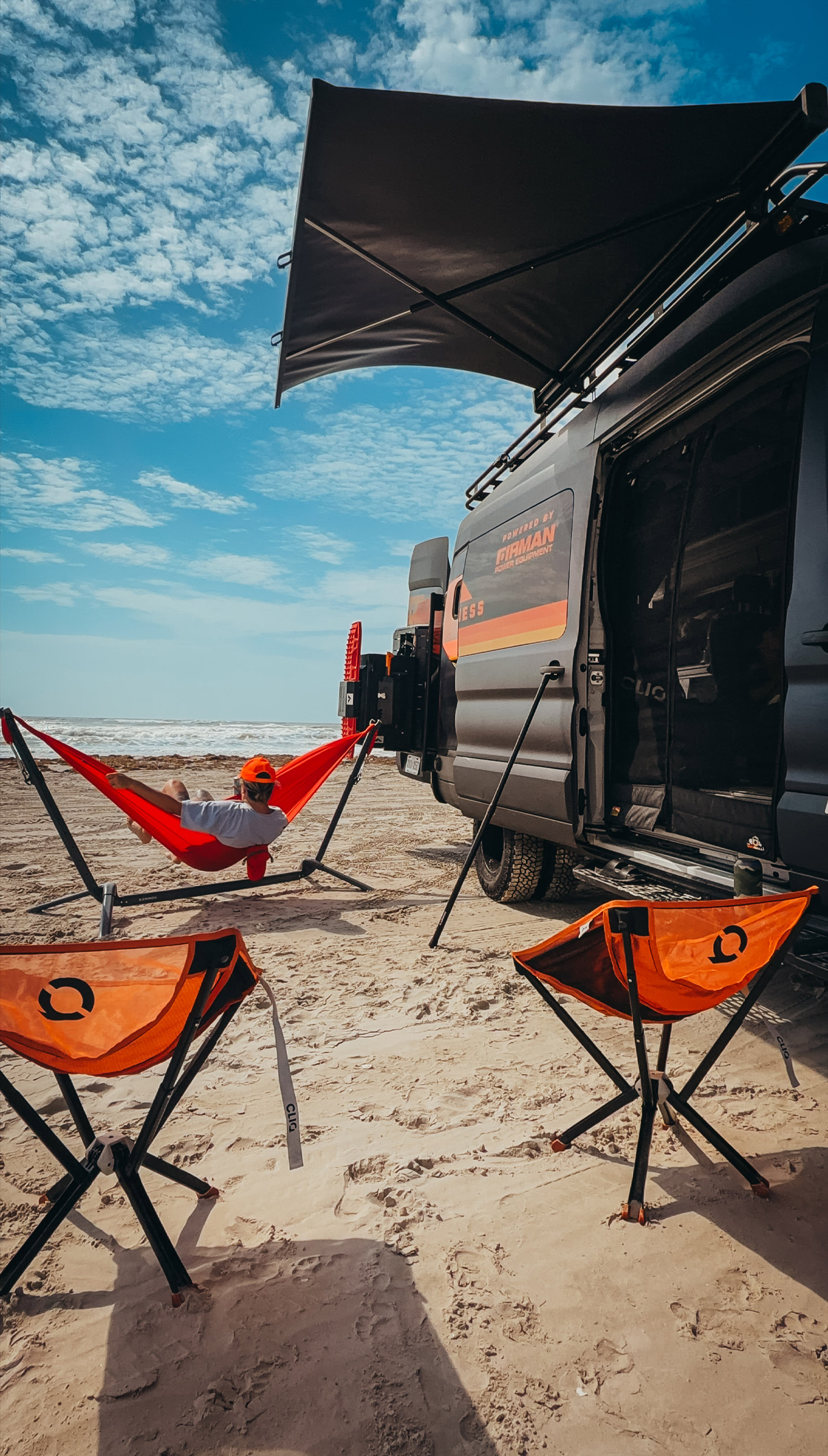
This summer was a perfect example. We spent a lot of time exploring along the Northeast Coast, where parking can be challenging even in a normal vehicle. We could pull into busy beach parking lots and explore places that would have been difficult—or completely off-limits—with our previous setups.
Then we could leave the crowds behind and head somewhere completely different.
That’s probably my favorite thing about the Transit. We don’t have to choose between having an adventure vehicle and having a practical vehicle.
For our family, freedom has become less about how far we can travel and more about how many places we can actually access once we get there.
A Van That Can Change With the Family
Aluminess: Why did VanDOit make sense for a family of five?
The modularity was probably the biggest thing for us.
Most prebuilt camper vans are designed around one or two people. Once you start looking at them through the lens of a family of five, you realize pretty quickly how limited the options are.
With VanDOit, we could look at how our family actually travels and plan around what we needed—and just as importantly, what we didn’t need.
Instead of having a permanent layout dictate how we use the van, we can change the configuration depending on what we’re doing. We can prioritize seating when we’re using it as our everyday vehicle, sleeping space when we’re camping and gear storage when we’re heading out on a bigger adventure.
Because our kids are still growing, I love knowing the van isn’t locked into one configuration.
We didn’t need a camper van designed for someone else’s lifestyle.
We needed a van that could be designed around ours.
Aluminess: You’ve also deliberately left some traditional RV amenities out. Why?
We skipped both a permanent kitchen pod and a built-in bathroom.
After years of owning RVs with those amenities, we realized we don’t necessarily need them inside the van. We do most of our cooking outdoors anyway. For bathrooms, we can use campground facilities when they’re available and carry a small BOXIO toilet when we’re boondocking somewhere more remote.
With five people, we would much rather dedicate that interior space to safe seating, sleeping and all the gear that allows us to actually get outside and explore.
Our years of RV travel helped us separate what’s convenient from what’s actually essential.
We really look at the van as three things: our vehicle, our gear garage and our shelter.
Sometimes what you choose not to put inside the van is just as important as what you put in it.
Built to Be Used
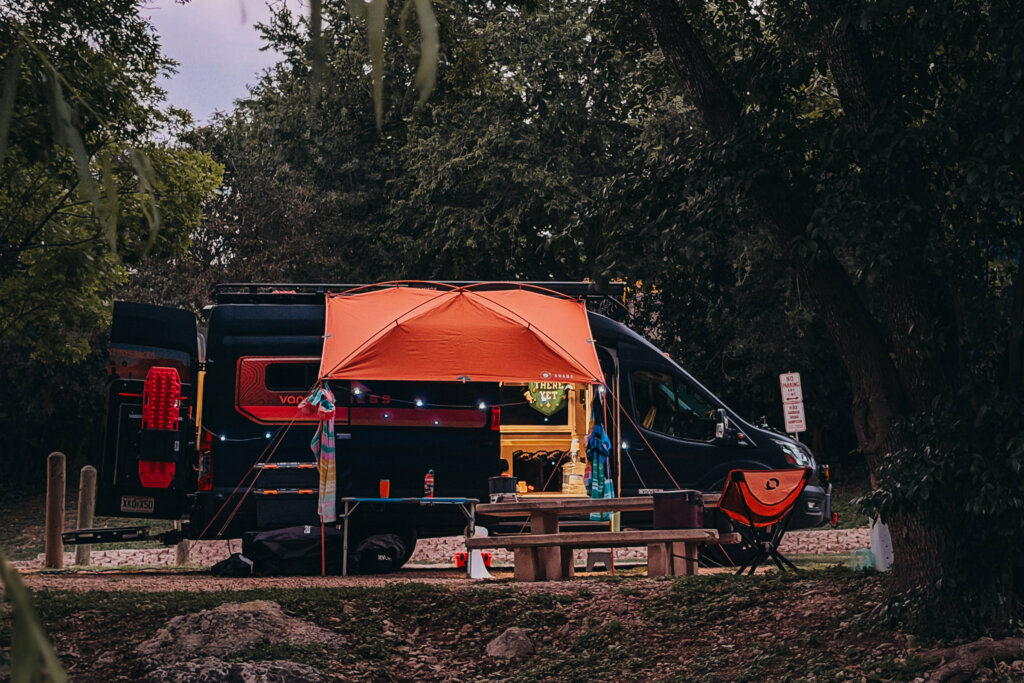
Aluminess: The Transit certainly doesn’t look like a traditional family camper van. What was behind the full exterior bed-liner treatment?
We knew we weren’t going to baby it.
We’ve had wraps on previous rigs, and while they held up pretty well, enough forest roads, tight trails, branches, sun and weather eventually take their toll.
With the Transit, we wanted something more durable.
The bed-liner-style coating gives the exterior an extra layer of protection against branches brushing against the van, dirt roads, rocks and weather. We don’t have to stress nearly as much about every little scratch.
And I’ll admit, the fact that it makes the van look pretty tough doesn’t hurt either.
It’s one of those choices where function and aesthetics lined up perfectly. We wanted an exterior that looked like it belonged on an adventure van, but more importantly, one that could actually handle being treated like one.
Raising Kids With a Bigger Backyard
Aluminess: What does life on the road give your kids that would be difficult to replicate somewhere else?
Perspective.
My kids have been able to experience how different and how huge this country really is. They’ve seen deserts, mountains, oceans, tiny towns, huge cities, national parks and places they probably never would have encountered if we stayed in one place.
But it’s also taught them that life doesn’t have to look one specific way.
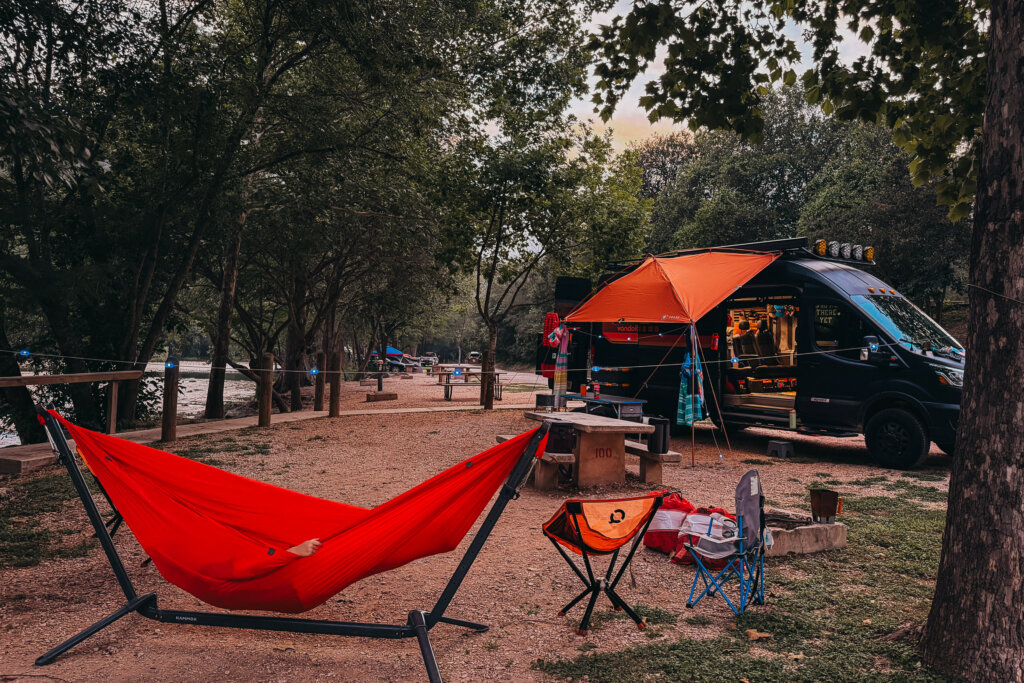
Home can be an RV, a van or wherever we happen to park for the night. Learning can happen at a picnic table or halfway up a trail. Adventure doesn’t have to be something you save for a one-week vacation every year.
For them, it’s just part of life.
Aluminess: How does roadschooling actually work?
We definitely use curriculum.
Sometimes people hear “roadschooling” and picture us wandering around national parks hoping the kids accidentally learn math somewhere along the way.
We still have structured learning, books, online curriculum, reading, math—all of that.
But the road gives us this incredible second classroom.
If we’re learning about geology and then standing inside a canyon, that lesson hits differently. History becomes much more interesting when you can stand where it happened. Science is everywhere when you’re constantly moving through different ecosystems.
National parks are some of my favorite classrooms because there is almost always something the kids can connect to: geology, wildlife, ecosystems, history and conservation.
Junior Ranger programs are also one of my favorite resources.
Some of the best moments happen when one of the kids suddenly recognizes something we’ve talked about before and yells, “WAIT, I KNOW WHAT THAT IS!”
That’s when you realize it stuck.
Kids Will Humble Your Itinerary
Aluminess: How have your children changed the way you travel?
Kids will humble your itinerary really fast.
You can plan this amazing hike or destination, and they might be completely fascinated by a creek 200 yards from the parking lot.
I’ve learned that sometimes you just let them stay at the creek.
Adults tend to travel with this checklist mentality: we drove all this way, so we need to SEE THE THING.
Kids don’t care about checking something off a list. They notice bugs. They climb the same rock 37 times. They make friends with another kid at the campground. They find a stick that apparently needs to travel with us for the next six states.
They’ve taught me that experiencing a place isn’t necessarily about seeing the most of it.
Sometimes it’s about giving yourself enough time to actually be there.
Confidence Comes After You Start
Aluminess: You’ve encouraged other moms to camp and adventure with their children even when another adult can’t come along. Where did that confidence come from?
Honestly, I think the confidence came from doing it before I felt completely confident.
My husband works away a lot, and I realized pretty quickly that if I always waited until another adult was available, there were going to be a lot of things my kids and I simply didn’t do.
So I started doing them myself.
Every time I drove the rig, backed into a campsite, set up camp, handled something going wrong or took the kids somewhere new on my own, I added another little piece of evidence that said, “Okay, I can actually do this.”
That’s something I really want other moms to understand: you don’t have to magically become fearless first.
A lot of confidence comes after you do the thing that intimidated you.
Aluminess: What advice would you give someone who wants to start but feels intimidated?
Start smaller than the version you’re dreaming about.
You don’t have to make your first trip a week of boondocking 40 miles from civilization. Camp 20 minutes from home. Drive the vehicle around an empty parking lot. Practice backing up when nobody is watching. Learn how your equipment works before you depend on it.
Spend one night somewhere with cell service and a store nearby.
Then keep stretching that comfort zone.
Things will go wrong. That’s camping. That’s travel. That’s parenting, honestly.
But most problems are solvable, and every problem you solve makes the next one feel a little less intimidating.
You don’t need to feel fearless.
You just need to feel prepared enough to try.
And then send it.
The Difference Between Adventure and a Dumb Decision
Aluminess: How comfortable are you taking the Transit off pavement today?
My comfort level has definitely changed, but experience has also made me more respectful of knowing when to turn around.
The truck camper and now the Transit opened up an entirely different kind of exploring for us. I’m much more comfortable taking dirt roads and getting farther away from developed campgrounds, but having kids with me also means I’m not interested in proving how hardcore we can be.
There’s a difference between adventure and making a dumb decision.
I’m comfortable pushing our boundaries when I know what we’re getting into, but I’m also completely comfortable saying, “Nope, we’re turning around.”
Confidence isn’t believing you can drive through everything.
Sometimes it’s knowing when you shouldn’t.
Preparation is what gives me the confidence to go farther. We think about water, food, fuel, weather, first aid, vehicle recovery, emergency power and communication before heading somewhere remote.
We also carry a satellite communicator, which gives me a lot of peace of mind when the phones stop working.
But one of the most important pieces of gear is knowing how to use what you’re carrying. Recovery equipment isn’t very helpful if the first time you touch it is after you’re already stuck.
Being prepared doesn’t take away from the adventure.
For me, it’s what allows us to have one and stay out longer.
An Adventure Van Is a Tool for Getting Outside
Aluminess: What separates simply camping out of a van from using an adventure van to explore?
To me, camping out of a van is using the van as the destination.
An adventure van is using it as the tool that gets you to the destination.
We didn’t get a van because we wanted a smaller RV. We wanted fewer limitations.
We wanted to take the dirt road, fit into the trailhead, change locations easily, pull over because we saw something interesting and reach places that weren’t realistic with our previous setup.
The van is a shelter, sure, but the point isn’t to stay inside it.
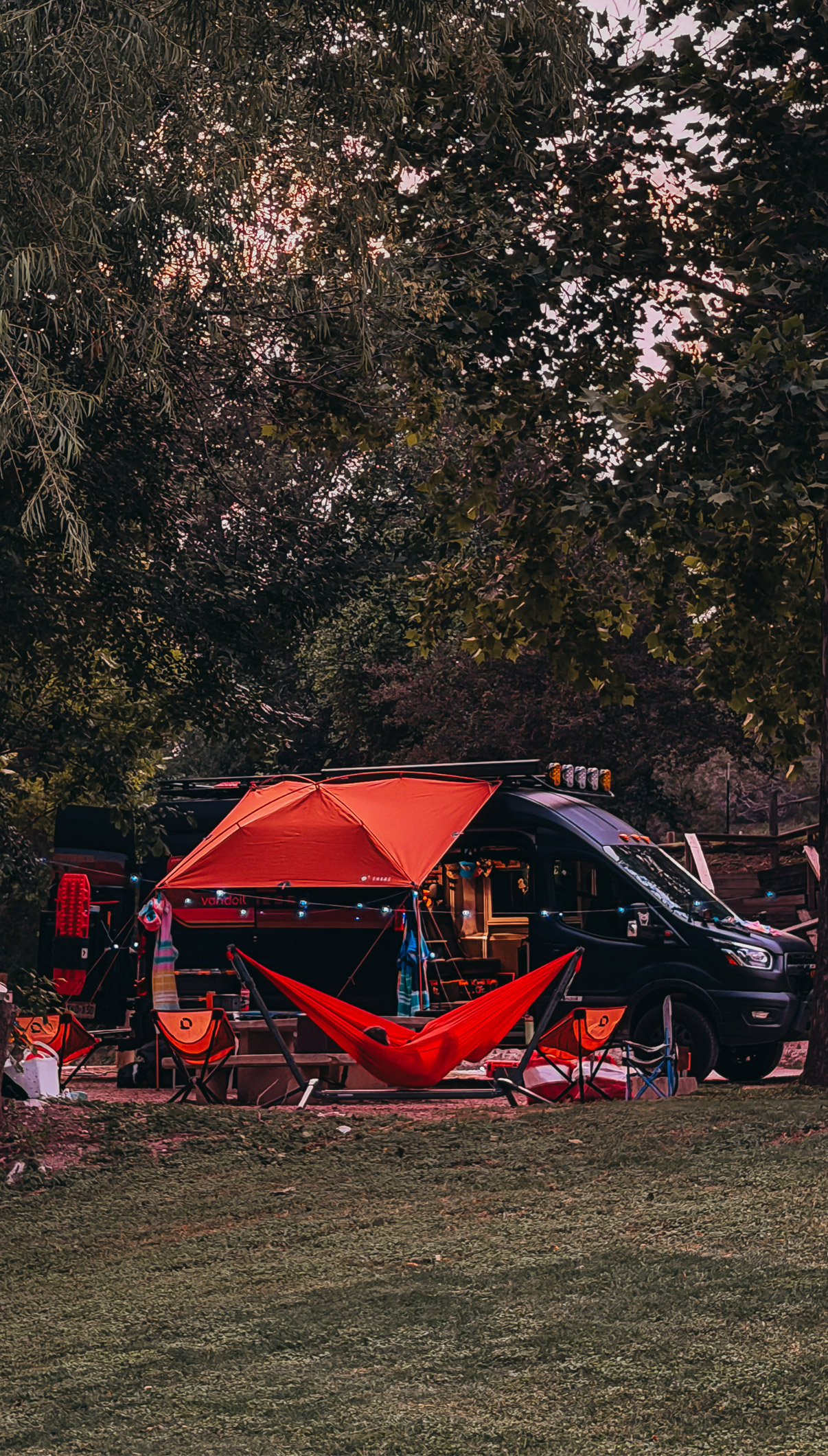
If we’re doing it right, the doors are open, the kids are outside, hiking shoes are dirty, somebody has rocks in their pockets and we’re using the van to get closer to whatever we’re there to experience.
It’s not just where we sleep.
It’s what gives us access to everything outside of it.
Why Aluminess?
Aluminess: What originally attracted you to Aluminess?
I was already familiar with Aluminess and loved that the products weren’t just about making a van look more adventurous.
They were actually designed for people using their vans this way.
Lightweight, functional exterior storage and protection made a lot of sense for the kind of travel we wanted to do.
And I LOVE ORGANIZATION.
The relationship really grew naturally. We genuinely use the products every day. Sharing them as part of our travels and showing what they look like for a real adventurous family is easy.
Becoming an ambassador felt like a natural fit because our Aluminess gear is such a big piece of how it’s possible for us to explore the way we do—feeling prepared and organized for whatever the adventure brings.
Aluminess: Your Transit carries a pretty substantial Aluminess package. What pieces matter most?
It’s hard to pick one because the whole setup works together.
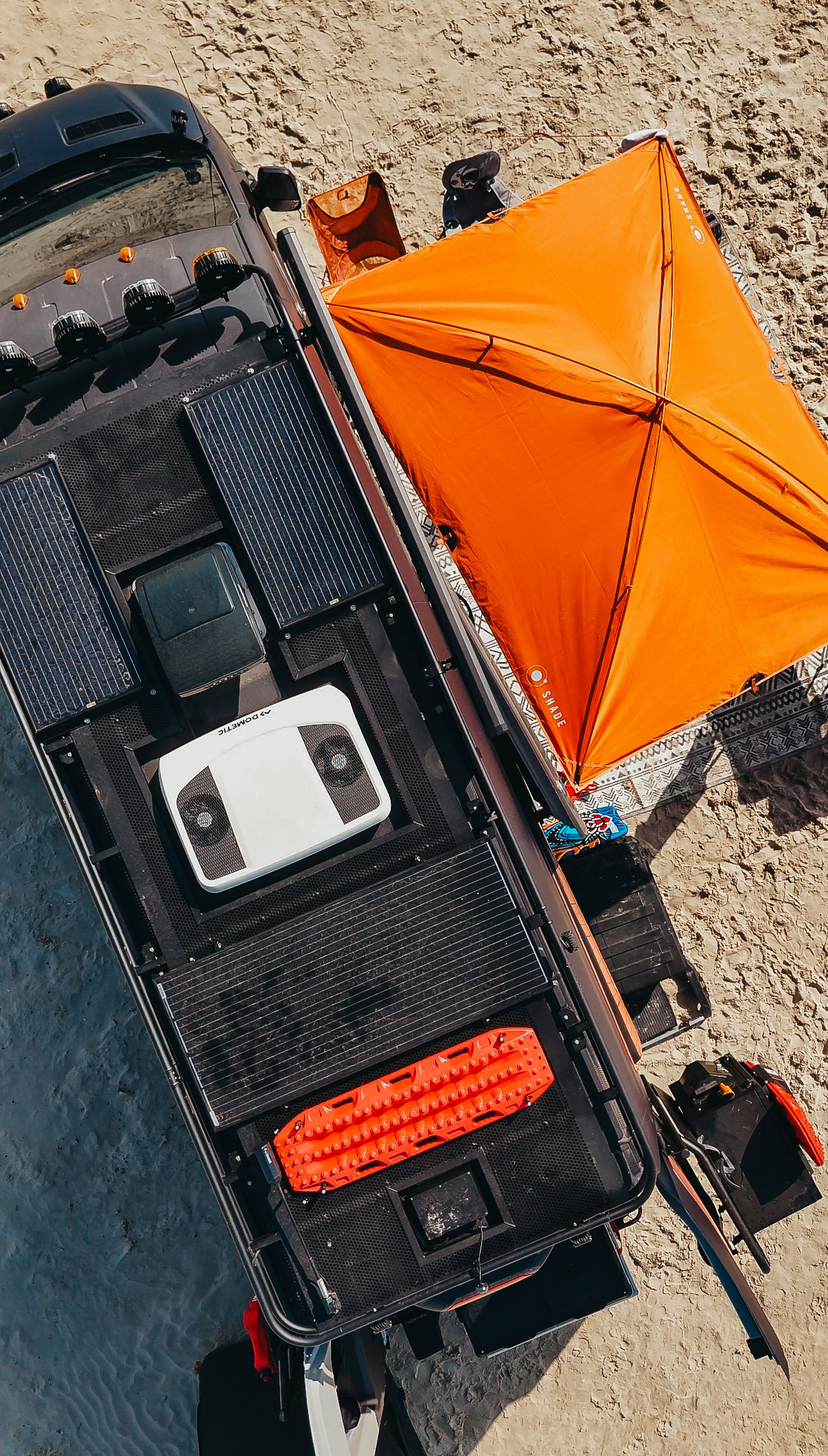
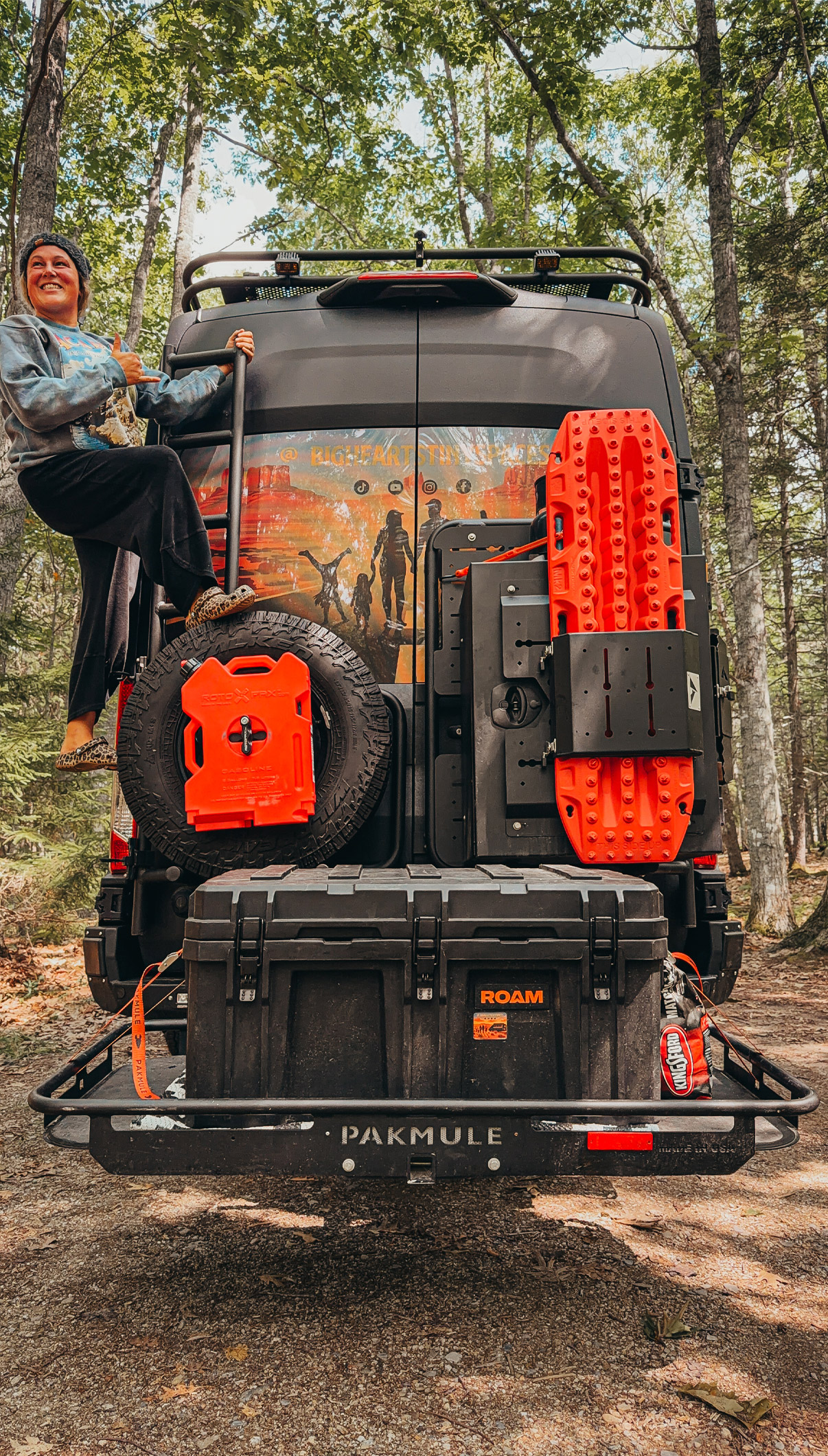
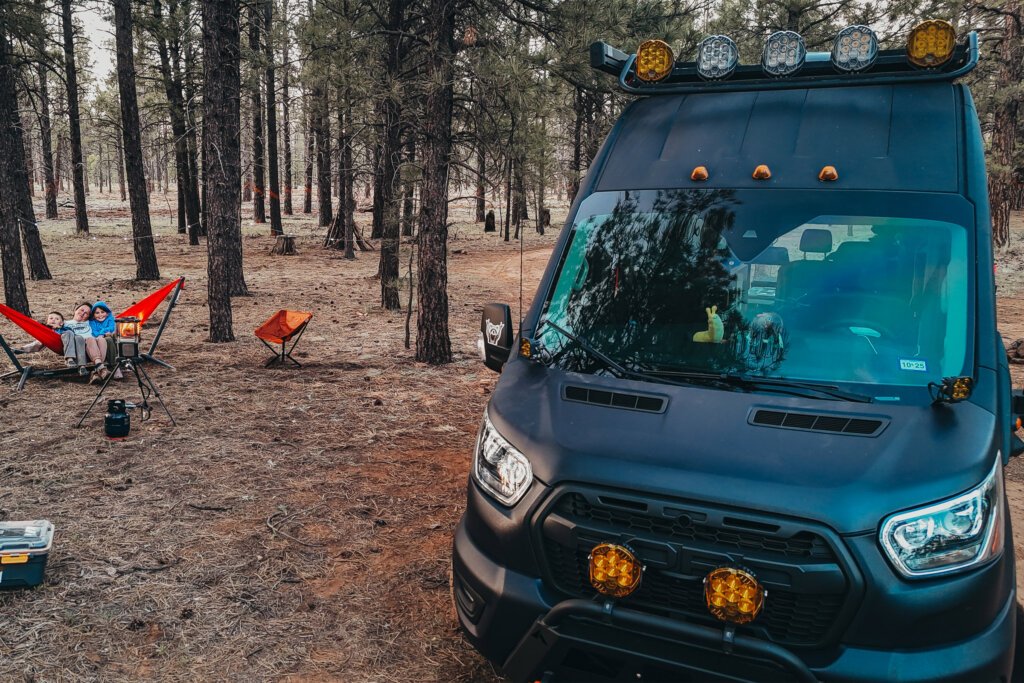
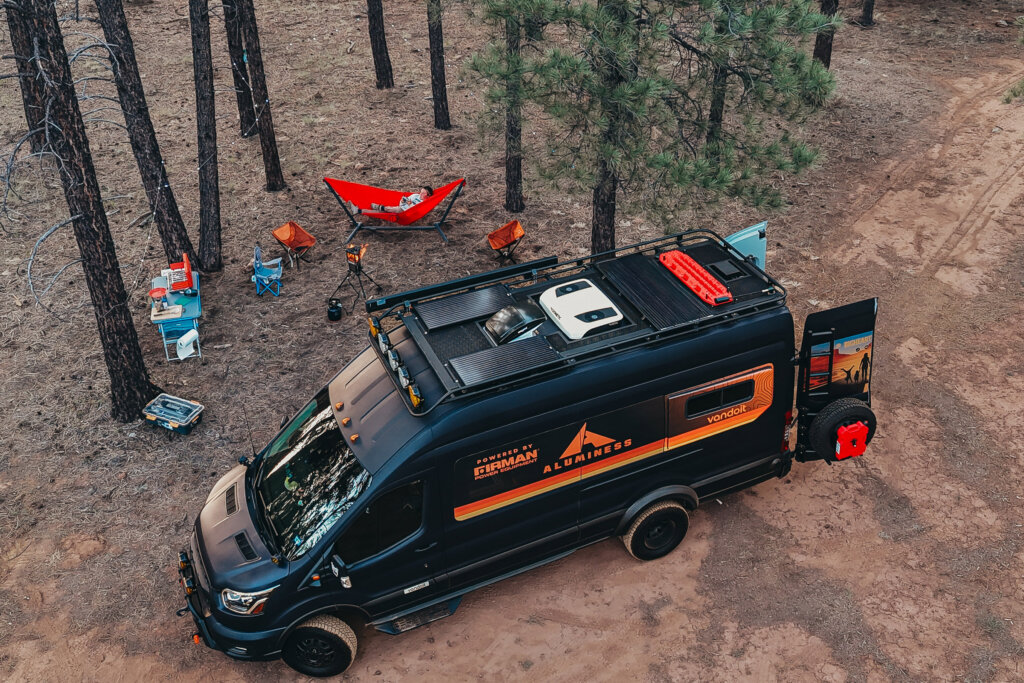
The roof rack gives us valuable usable space without sacrificing what’s happening inside the van. It carries our solar, A/C, vent fan, awning and exterior lighting.
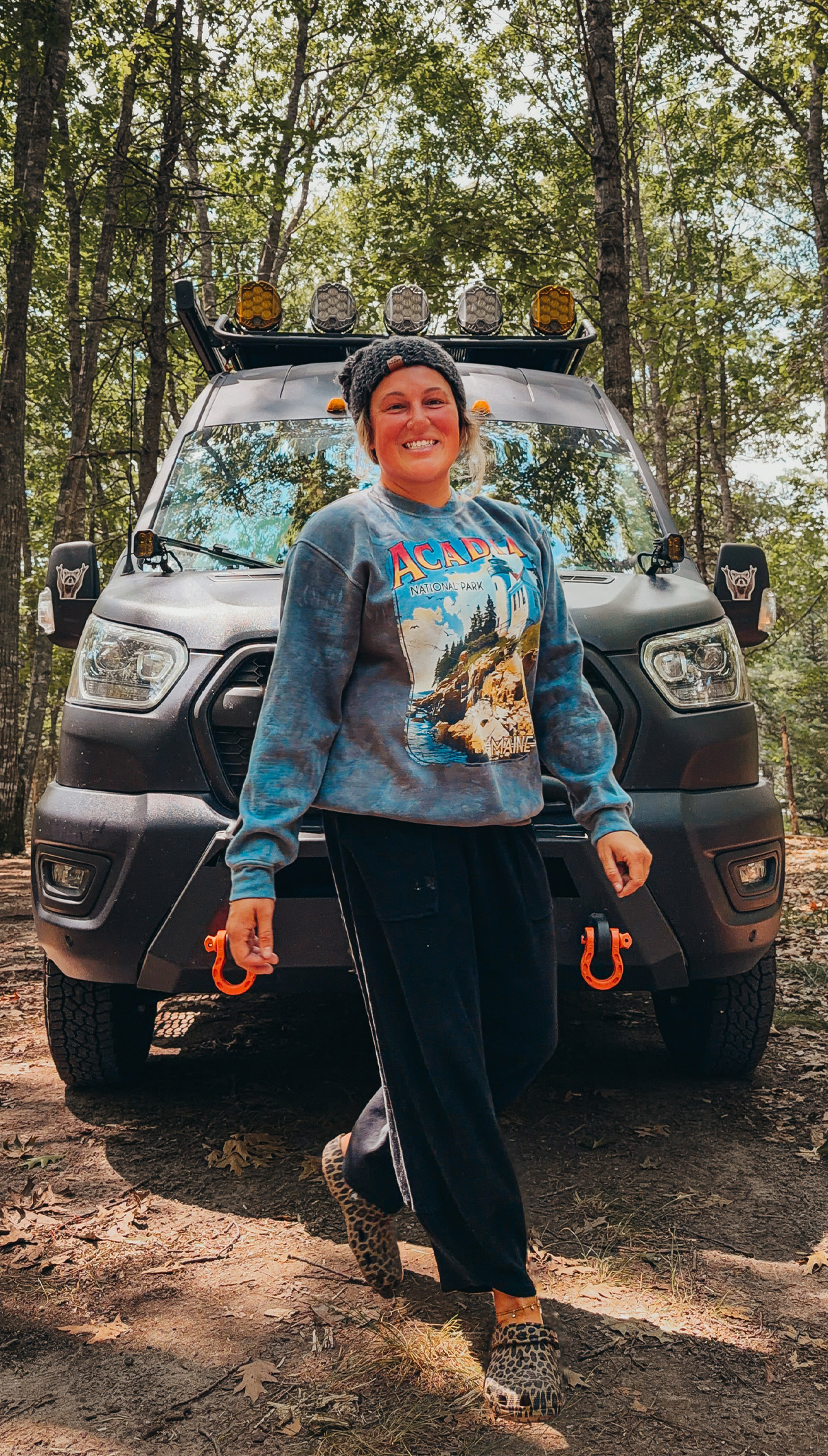
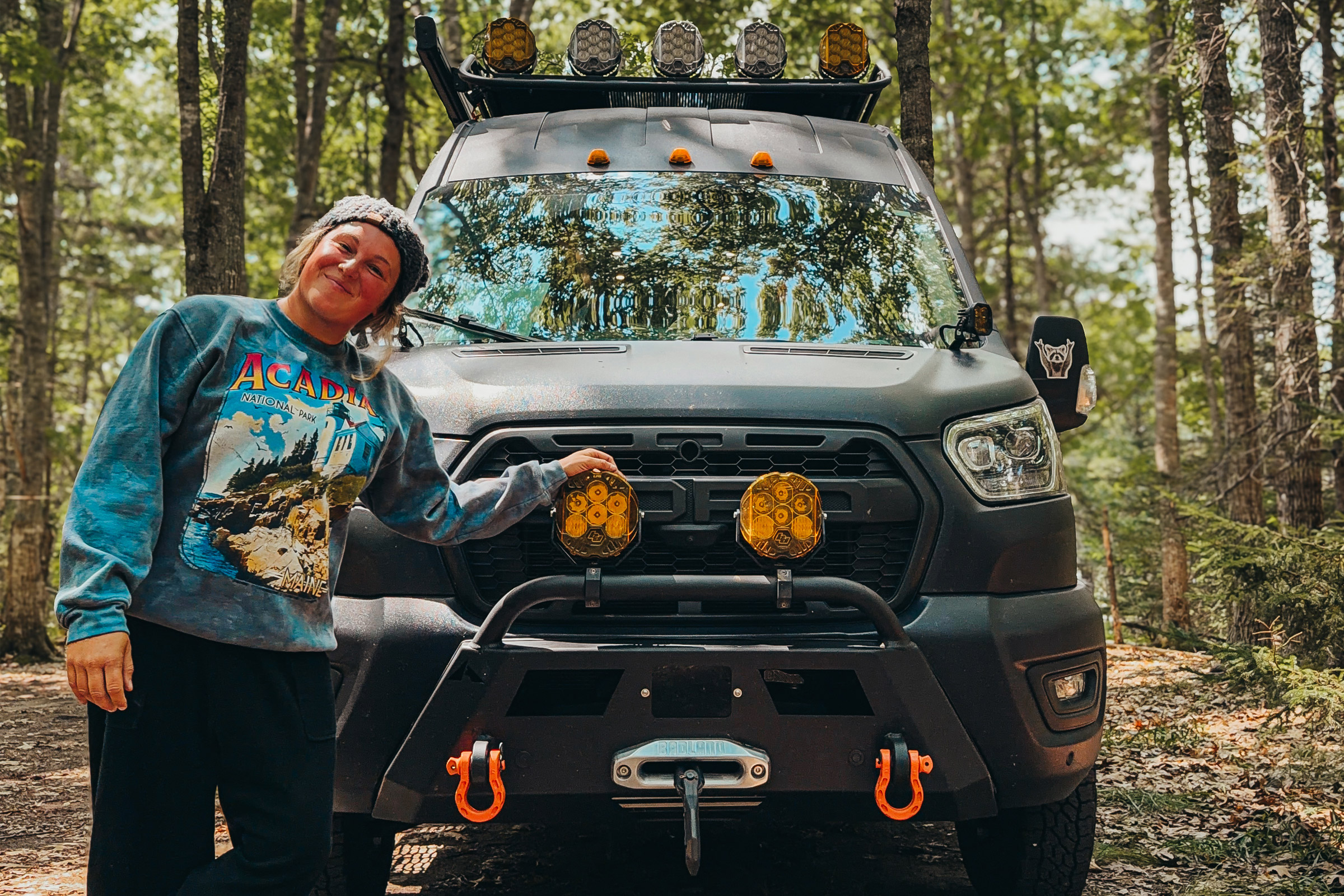
The front bumper adds protection and carries exterior lighting that I genuinely use, especially in fog or at night when wildlife is around.
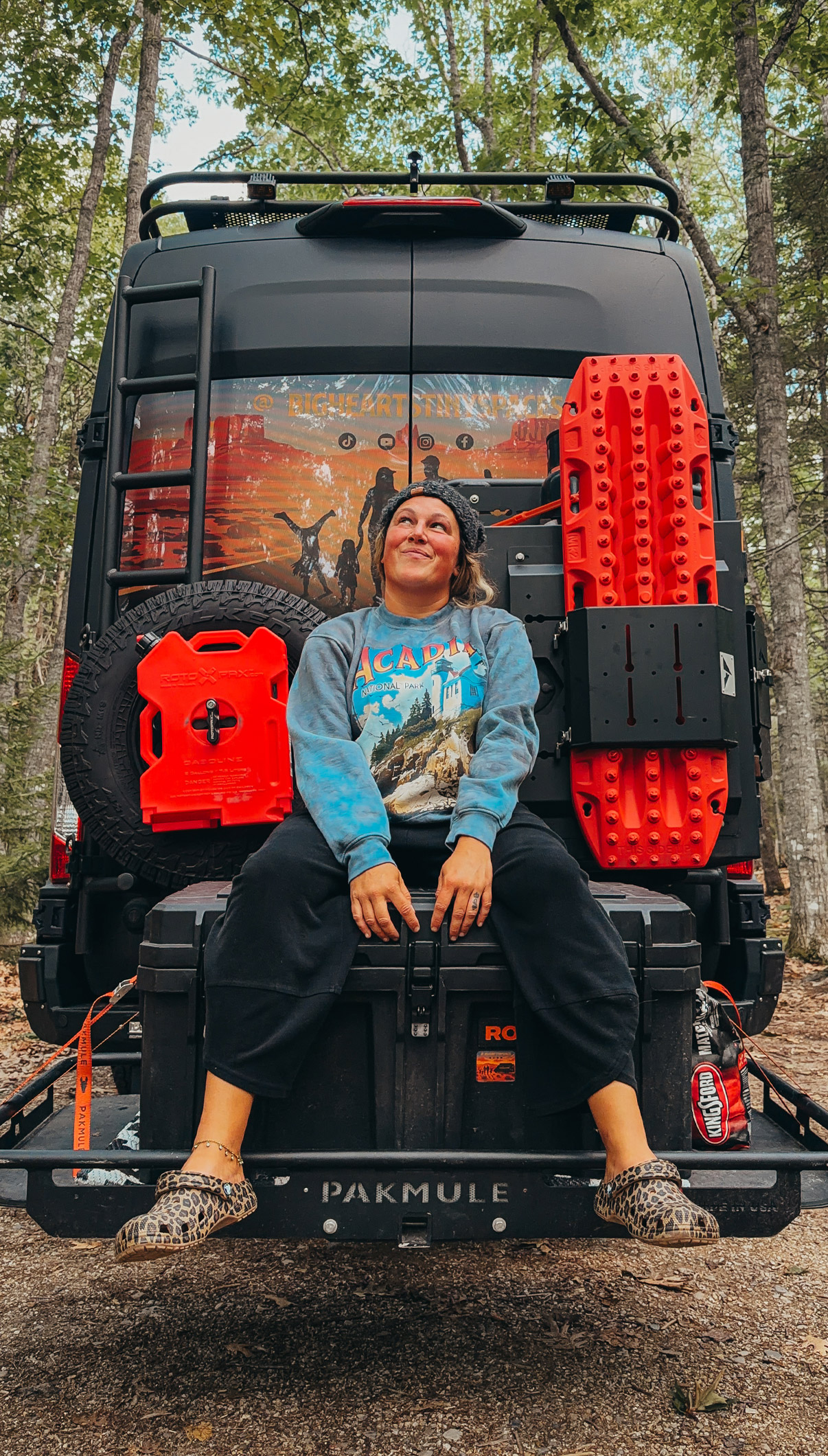
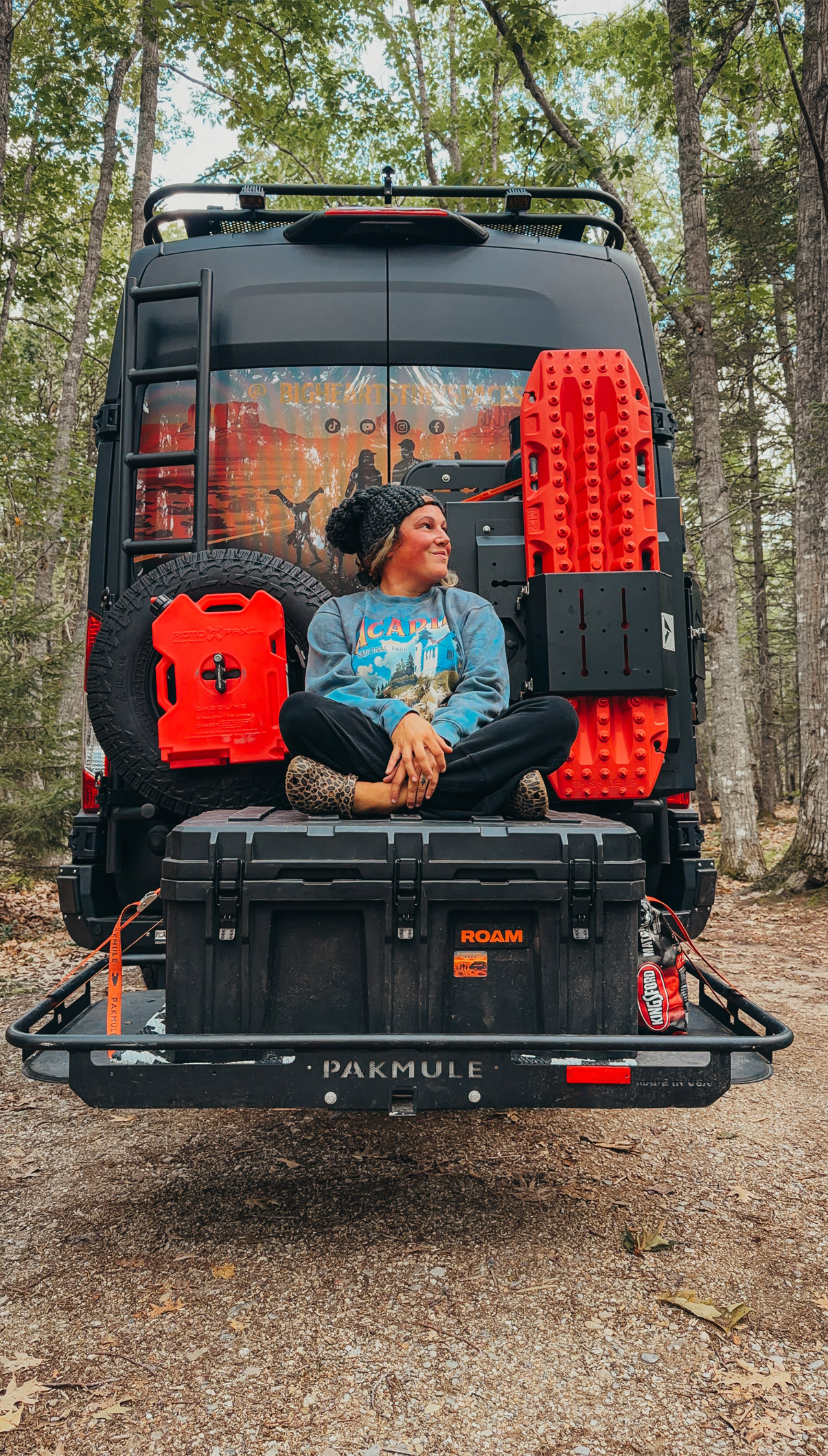
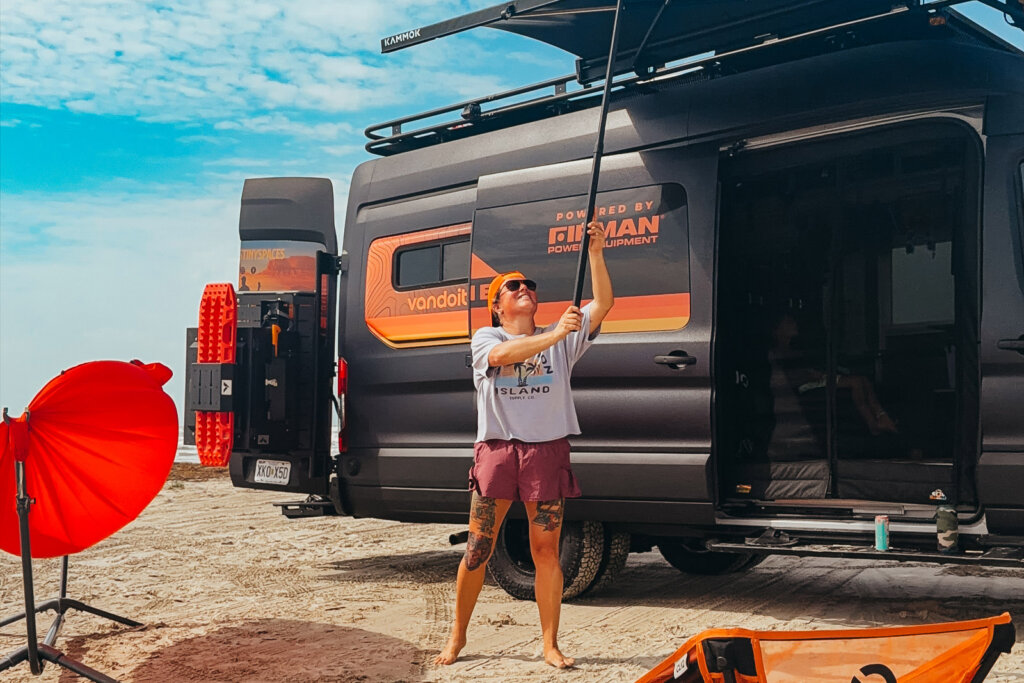
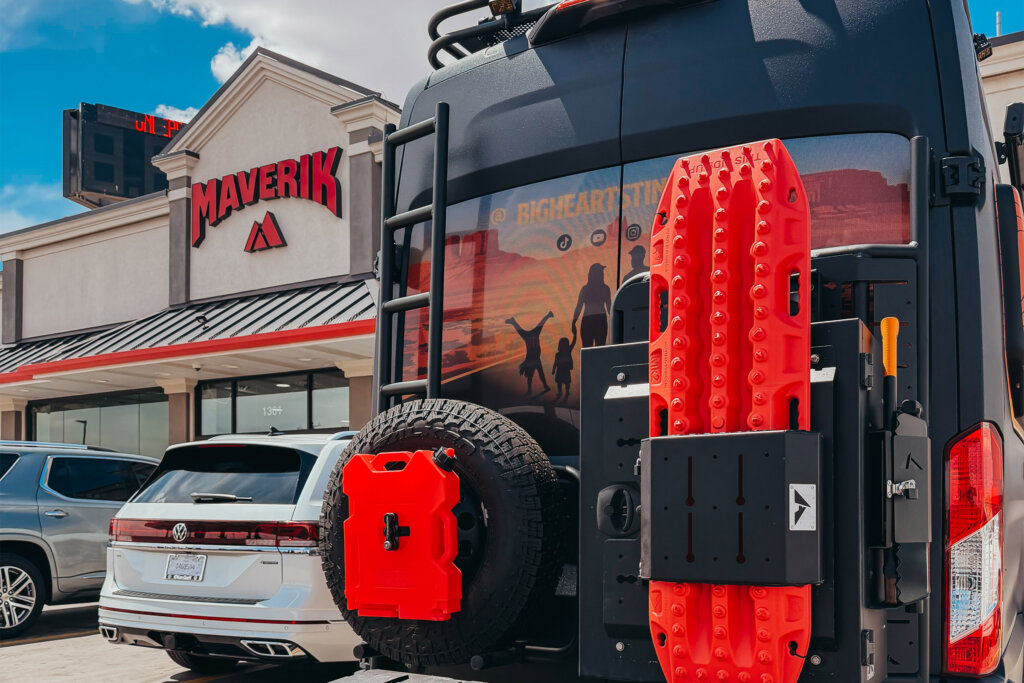
Our rear-door setup is a game changer. The BackPACK carries my storage box, which holds hoses, power cords, lights, tools and other essentials. The box gives everything a home. We also have propane and recovery gear organized back there.
The side steps might sound like smaller additions, but we use them constantly. When you’re getting kids and gear in and out all day, accessibility matters.
The tire carrier is another important part of making the van more capable for remote travel. If we’re farther off pavement, I want important vehicle equipment accessible without sacrificing our living space.
It’s less about one hero product and more about how the entire exterior system allows the van to function better for a family of five.
And it all works together.
Exterior Storage Gives Us Living Space Back
With five people inside a Transit, every bit of interior room matters.
“Exterior storage isn’t just convenient for us,” Sammy says. “It gives us living space back.”
Dirty shoes, wet gear, recovery equipment, camp equipment and tools all need somewhere to go. Moving the appropriate gear outside keeps the van cleaner, makes equipment easier to find and prevents the family from constantly rearranging one thing to access another.
The Deluxe Storage Box sees the most daily use, while the roof rack becomes particularly important during longer periods of boondocking because it supports the solar system, awning and exterior lighting.
And none of it is treated delicately.
“We are definitely not gentle with this van,” Sammy says.
Long travel days, dirt roads, dust, mud, bad weather, gear constantly moving in and out—and three young kids—have all become part of the durability test.
“This isn’t a show van for us,” she says. “It’s our family adventure vehicle, and the gear on it gets used accordingly.”
Aluminess: What Do You Hope the Kids Remember?
I hope they remember that their mom did hard things and their dad sacrificed so much so they could have a childhood full of experiences.
There are so many parts of this lifestyle they don’t see yet. They don’t see all the planning or stress. They don’t fully understand how much their dad sacrifices by working away from us so often, or how many times I’ve been scared to do something but did it anyway because I didn’t want my fear to become their limitation.
Someday, I hope they understand that.
But when they think about their actual childhood, I hope they remember the good stuff.
Sleeping under the stars. Hiking somewhere incredible. Campfires. National parks. Weird roadside stops. Making friends all over the country. Learning about something and then getting to stand in the place where it actually happened.
More than anything, I hope they remember that their parents chose to give them time and experiences.
Quick Hits
Favorite Family Destination: Alaska
Best Boondocking Camp: Outside Goblin Valley State Park, surrounded by some incredible hoodoo-filled campsites.
Favorite National Park: Olympic or Big Bend
Most Memorable Trail: Hoh Rainforest in the rain during fall
Kids’ Favorite Thing About the Van: Sleeping in the cab bunks
Mom’s Favorite Thing About the Van: The modularity
One Piece of Family Camping Gear You Never Leave Without: ICECO fridge
Favorite Aluminess Product: The Deluxe Storage Box. “It holds SO MUCH. All my important gear and tools that I need for the exterior of the van are stored in there.”
One Thing Permanently Living in the Van That Might Surprise People: A banana slug stuffed animal
Next Stop: Wintering out West near Las Vegas
Big Adventure Still on the List: Baja, Mexico